The Victory Pint: Why We Equate Winning with Drinking
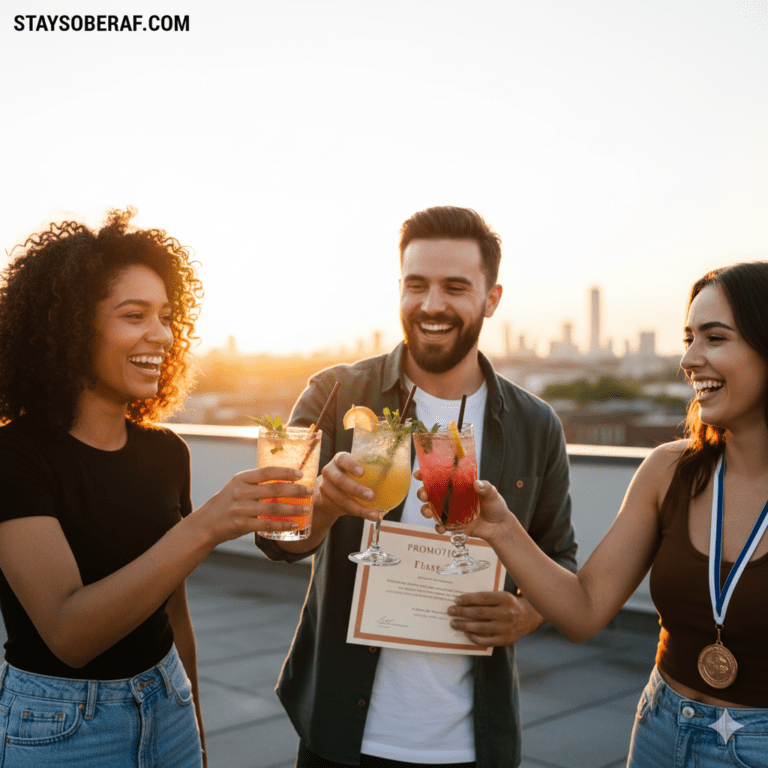
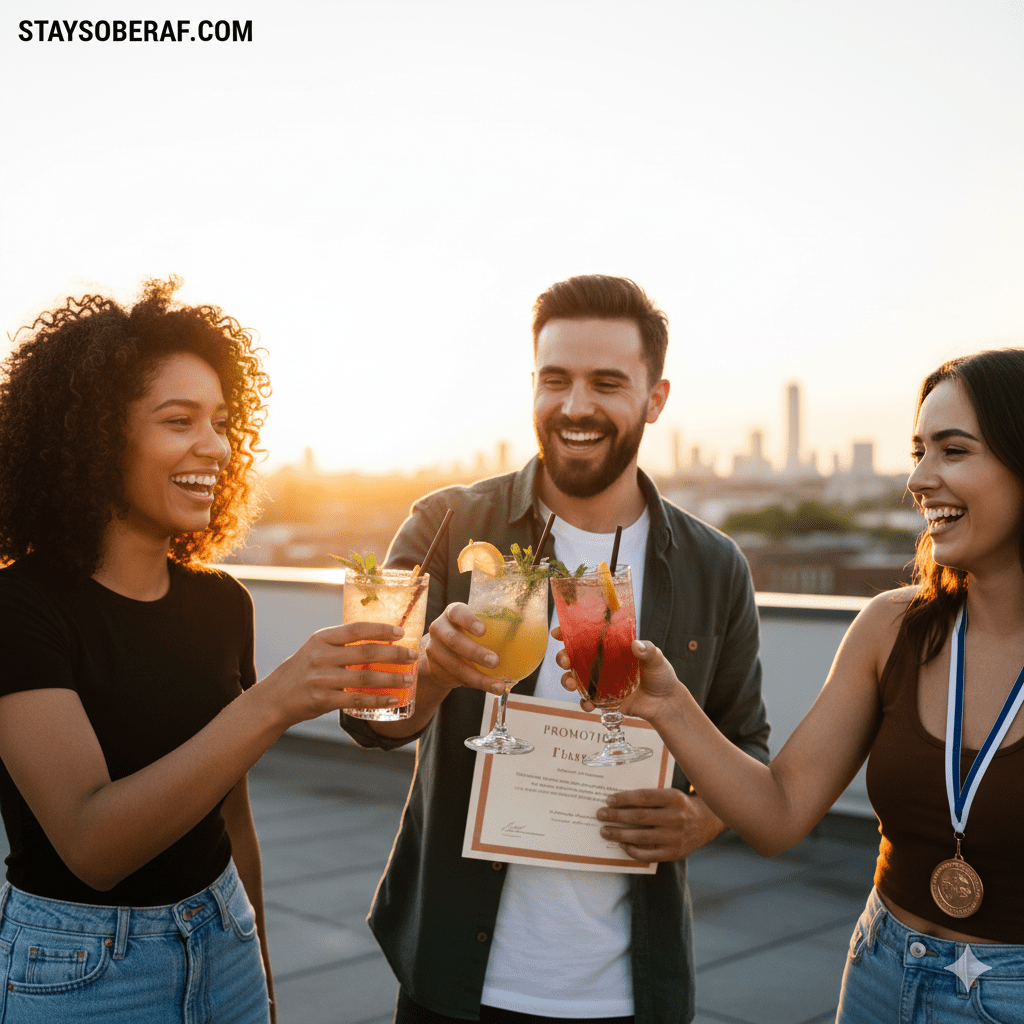
Whether it’s a job promotion, a wedding, or finishing a marathon, the first question often isn’t “How do you feel?” but rather, “Where are we grabbing a drink?”
In our culture, the popping of a cork and the clink of glasses have become the universal soundtrack to success. But have you ever stopped to wonder why we’ve tied our greatest milestones to a substance that is, scientifically speaking, a depressant?
Understanding this “celebration reflex” is the first step in reclaiming your achievements and celebrating them on your own terms.
1. The Power of Cultural Conditioning
From the time we are children, we are “trained” to see alcohol as the ultimate reward. Think about it:
-
Media & Movies: Every cinematic victory ends with a toast.
-
Sports: We see athletes spraying champagne over each other the second they win a championship.
-
Family Rituals: We watch our parents toast at holidays and weddings, internalizing the idea that “special” equals “spirits.”
By the time we reach adulthood, our brains have built a powerful association. We don’t just drink because we want to; we drink because we’ve been told that’s what a “winner” does.
2. The Dopamine “Double-Dip”
When we achieve something big, our brain releases dopamine—the “feel-good” neurotransmitter. It’s nature’s way of saying, “Good job, do that again!”
Alcohol also triggers a massive release of dopamine. When we drink to celebrate, we are essentially trying to “spike” the natural high we are already feeling. We’ve been conditioned to believe that the natural joy of an achievement isn’t “high” enough, so we use a substance to push it further, often overshadowing the actual accomplishment in the process.
3. Alcohol as a “Social Lubricant”
Celebrations are rarely solo events. We want to share our joy with others, and alcohol has long been used as a tool to lower social anxiety and increase extroversion.
People equate drinking with celebration because it creates an immediate (albeit temporary) sense of “bonding.” We feel more connected, more talkative, and more “in the moment.” However, this creates a dependency: we start to fear that without the drink, the celebration will be “boring” or the conversation won’t flow.
4. The Ritual of the “Transition”
Psychologically, we use rituals to mark the end of one phase and the beginning of another. Drinking serves as a sensory boundary.
-
Work-mode: Coffee, stress, focus.
-
Celebration-mode: Cocktails, relaxation, letting go.
Because alcohol changes our state of consciousness so rapidly, it’s an “easy” way to tell our brains, “The hard work is over. You can stop worrying now.”
Breaking the Reflex: How to Reclaim the Win
The problem with equating booze with winning is that it often leads to a “celebration hangover”—both literal and metaphorical. When the buzz wears off, we feel depleted, and the memory of the achievement is clouded by the substance.
New Ways to Mark the Moment:
-
The “Luxury” Pivot: Instead of a $100 bar tab, spend that money on a high-end meal, a spa treatment, or a piece of gear for your hobby.
-
Physical Commemoration: Buy something lasting—a watch, a book, or a plant—that serves as a permanent “trophy” for your hard work.
-
Shared Experience: Take your friends to an escape room, a concert, or a weekend hike. The memories will be much sharper than a blurry night at a bar.
Being “Sober AF” doesn’t mean you stop winning. It means you’re actually present to feel the victory when it happens.